
New Life in the Azalea Collection:
Thank you to B.W. Wells and CFWNC
9-11-2025
Carson Ellis, National Native Azalea Collection Curator
The first time I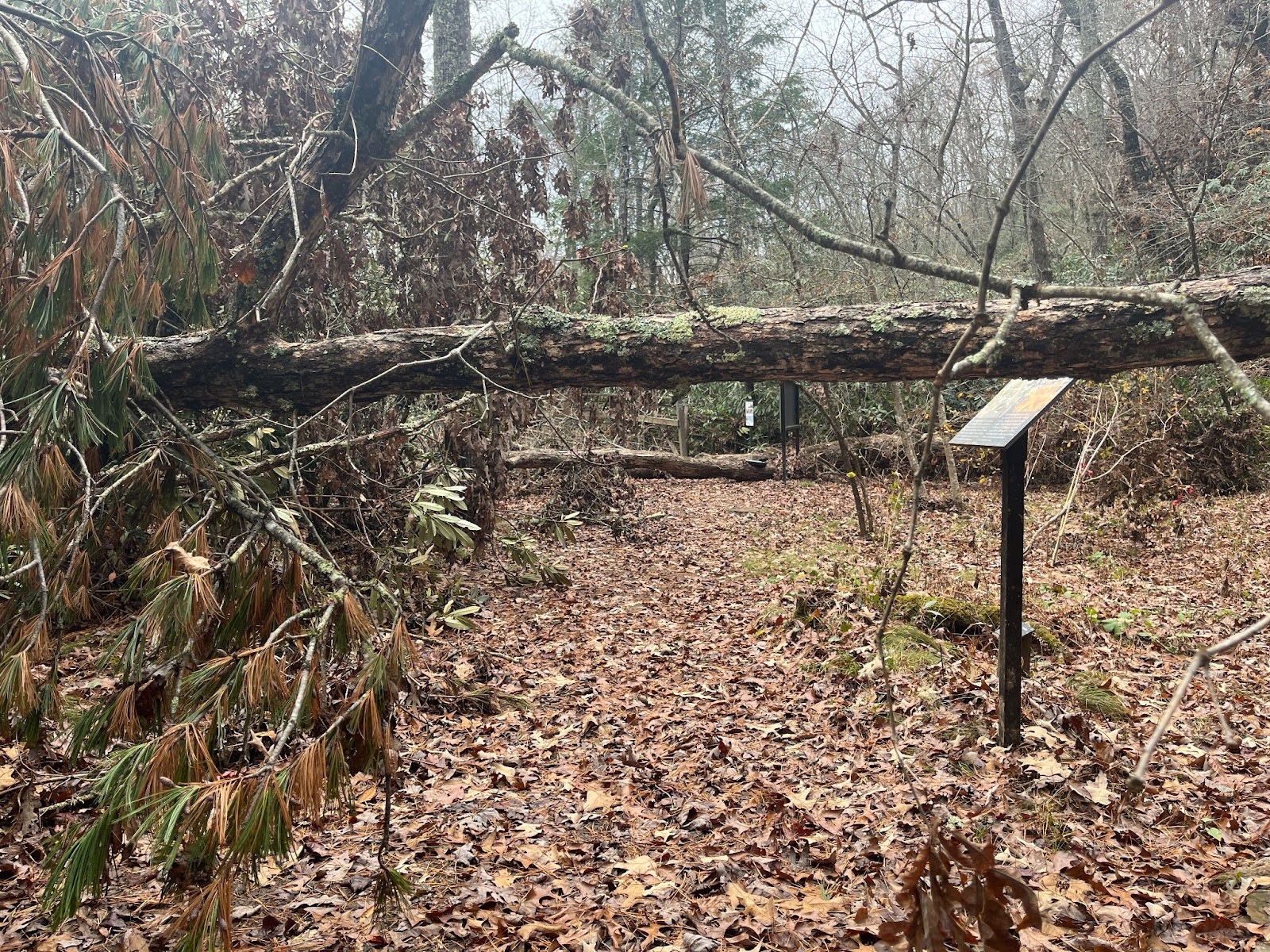 was able to visit the Native Azalea Collection after Hurricane Helene, our staff hadn’t begun to open up Bent Creek Road yet, so I walked there, following the creek as I climbed over and under fallen trees and weaved my way through tangles of prostrate canopy. In the Native Azalea Collection, I was first impressed to see how every leaf and speck of mulch had been swept away, leaving behind bare soil, exposed roots, and, in some places, piles of fine sand. This demarcation, along with the height of debris (a mix of leaves, sticks, fence posts, branches, and mud) piled against our bridge railings, fences, and azalea specimens, indicated that Bent Creek had risen 10’ above its usual channel, flooding over 80% of the Native Azalea Collection landscape. While I got in the habit of saying “It could’ve been worse!” Helene’s flooding and strong winds had left the Native Azalea Collection landscape altered, hazardous, and closed to the public for the foreseeable future.
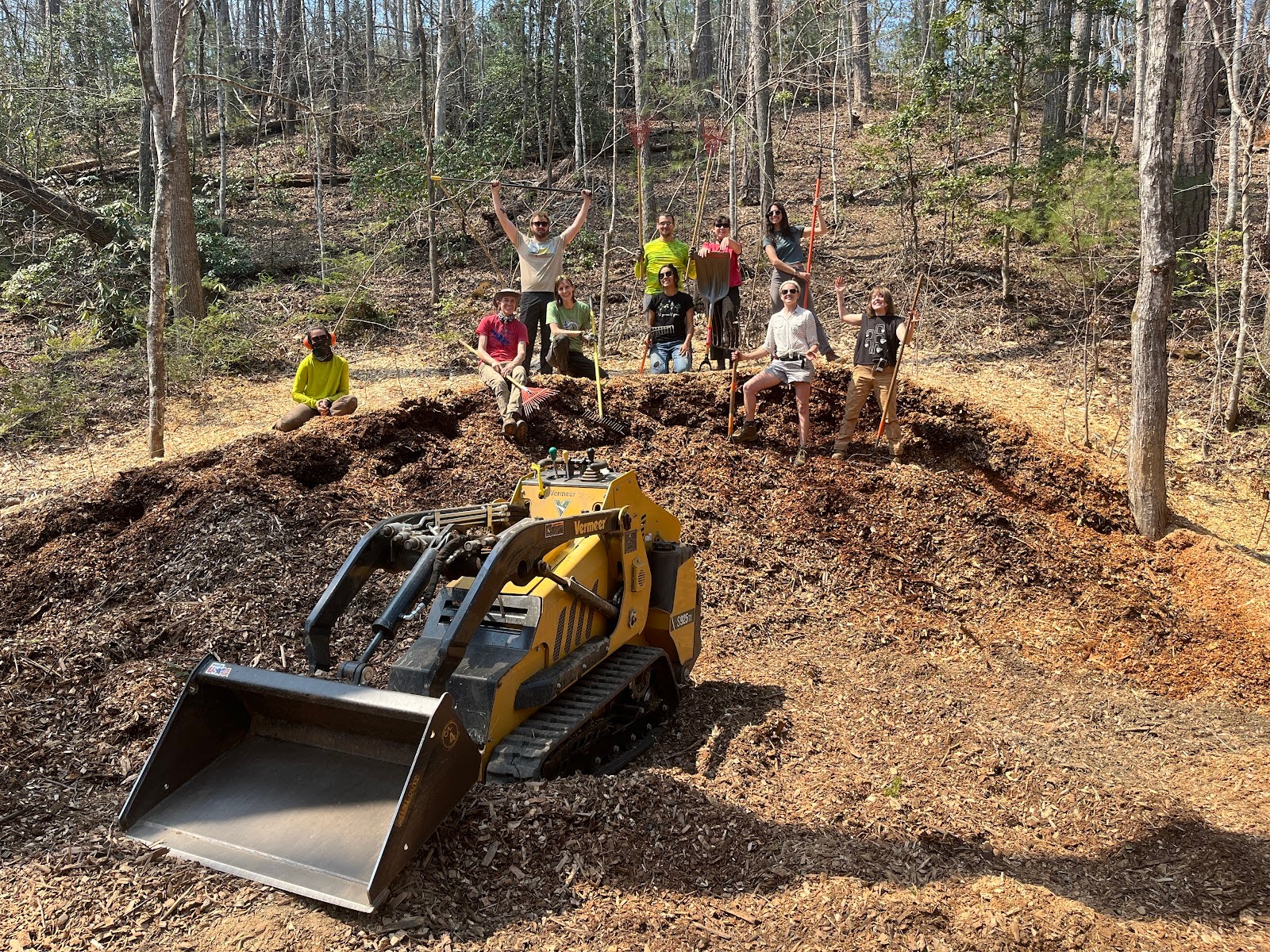 Following a mission by USACE to clear fallen and hazardous trees from the Arboretum’s trails, including those in the Native Azalea Collection, our Horticulture team set about removing the remaining debris, rebuilding fences, resurfacing the pathways, and recovering, mulching, and staking the damaged azalea specimens, with hope to re-open the landscape in time for the Native Azalea Collection’s third annual Native Azalea Day event on April 26th, 2024. This effort, which required over 800 hours of staff time, the rental of heavy equipment, and purchase of bulk materials, was supported with a timely grant from the Community Foundation of Western North Carolina (CFWNC). Additional support awarded by the NC Native Plant Society’s B.W. Wells Fund allowed us to purchase an array of native plants, including Cardinal Flower (Lobelia cardinalis), Carolina Green and Gold (Chrysogonum repens), Maryland Golden Aster (Chrysopsis mariana), and Seersucker Sedge (Carex plantaginea), which we used to restore plantings at the Collection’s entry where the storm and heavy equipment use had left behind bare ground.
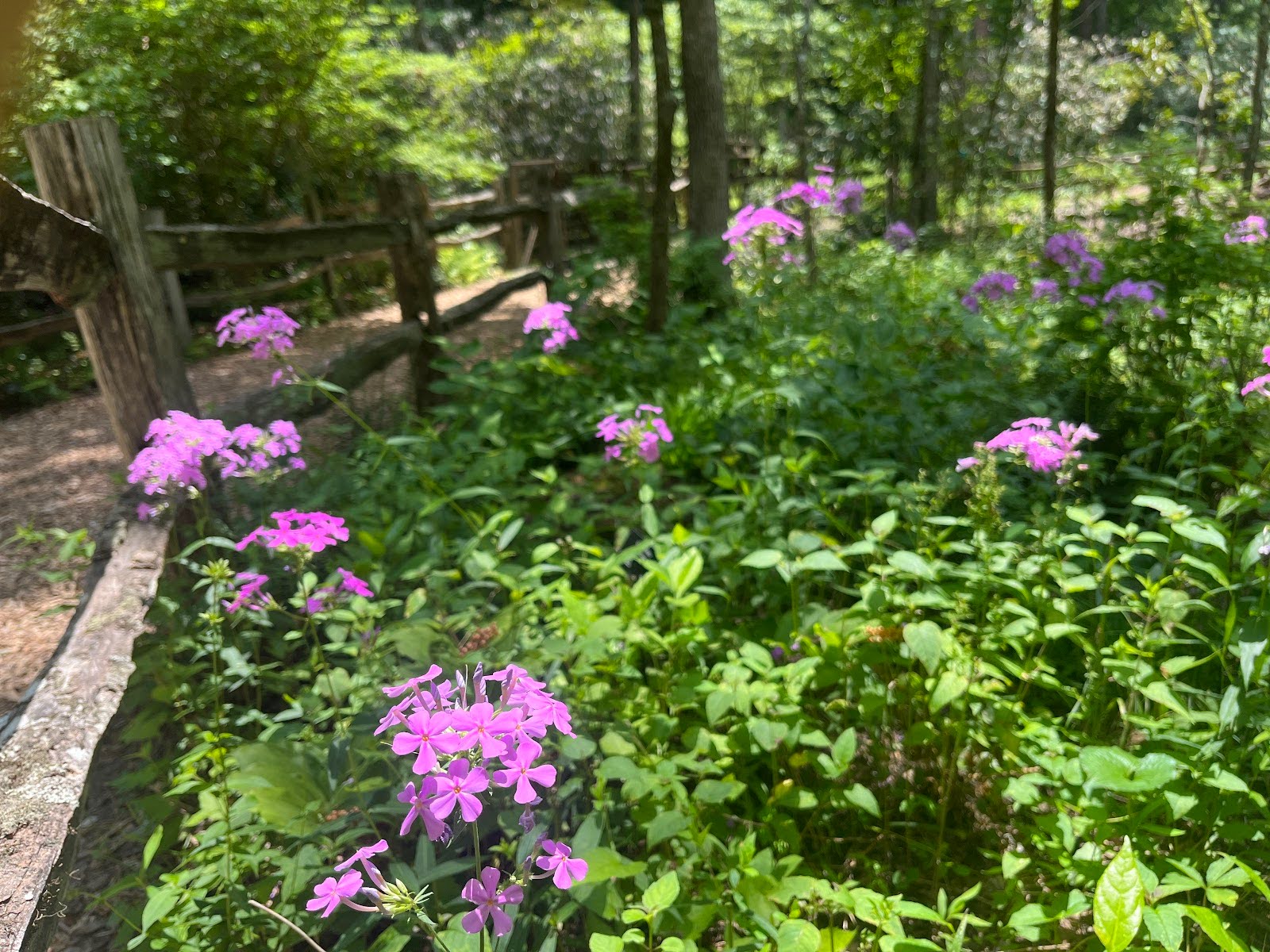 As we approach the one year anniversary of Hurricane Helene, our recovery efforts in the Native Azalea Collection are ongoing. But we are grateful and excited that, with thanks to generous support from the CFWNC and NC Native Plant Society, the Native Azalea Collection is open to the public and able to continue its mission as a unique natural landscape devoted to native plant conservation, education, and display!